If you sit at a desk for long hours and suffer from persistent lumbar tightness, spending money on an under desk footrest for lower back pain may be the single most effective low cost ergonomic fix you can make. Many office workers focus heavily on high end office chairs, yet overlook the foundation of proper sitting posture: keeping your feet firmly supported so your thighs sit parallel to the floor.
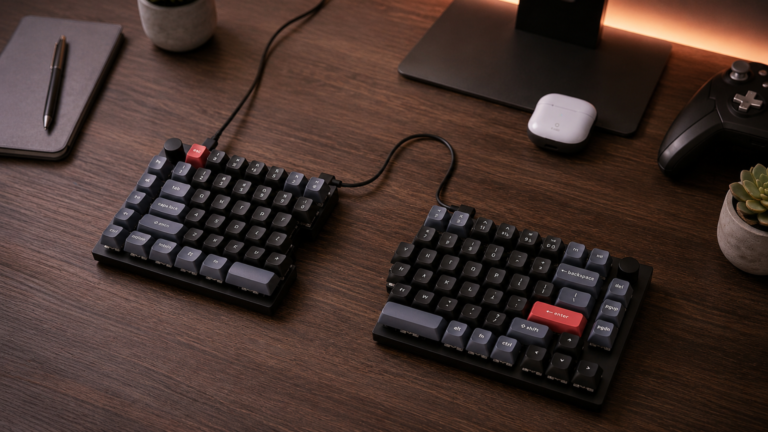
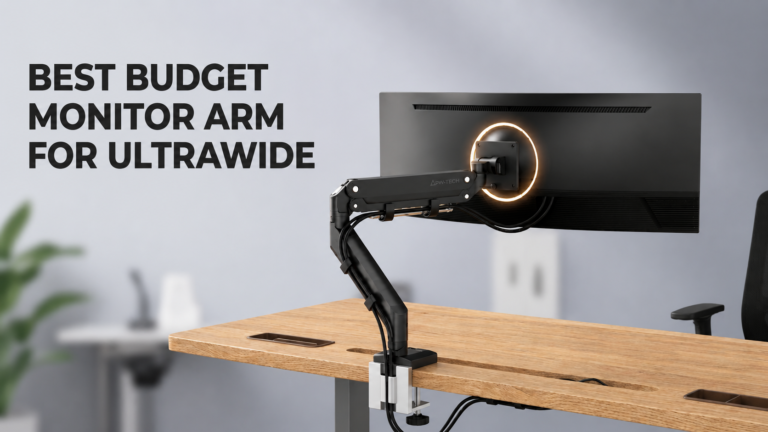
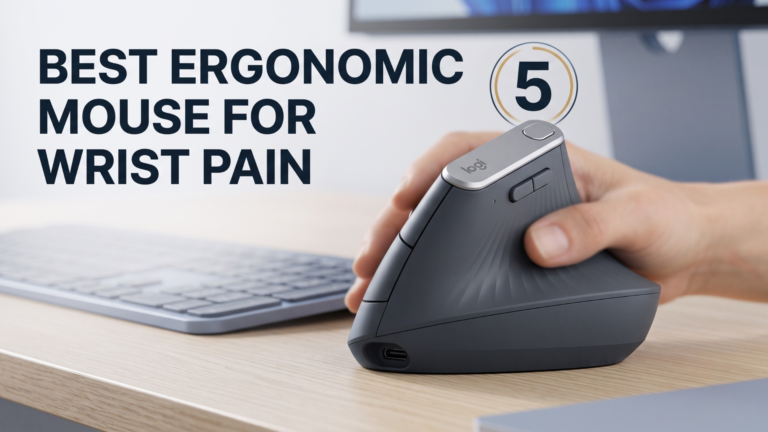
When your feet dangle or sit unevenly on the floor, your pelvis rotates backward, flattening your natural spine curvature and placing excessive pressure on your lumbar discs. Incorporating a dedicated under desk footrest for lower back pain helps realign your hips, distributes your weight evenly, and reduces static spinal pressure a core principle highlighted in OSHA workstation design guidelines. Paired with the best ergonomic mouse for wrist pain, a split mechanical keyboard for programming, and a best budget monitor arm for ultrawide, an ergonomic footrest completes a pain free, posture aligned workspace.
In this guide, we evaluate the 5 best under desk footrests on Amazon for 2026, comparing their cushioning, elevation adjustments, build quality, and ergonomic benefits.
Do Under Desk Footrests Really Help Relieve Lower Back Pain?
Yes, placing an under desk footrest for lower back pain directly addresses the root biomechanical causes of desk strain. Here is how elevated foot placement alleviates back discomfort:
- Relieves Lumbar Pressure: Raising your feet slightly above floor level tilts your pelvis forward, maintaining the natural inward curve (lordosis) of your lumbar spine and taking strain off your lower back muscles.
- Eliminates Thigh Compression: When your chair seat pan presses against the back of your thighs (often caused by raising your chair so your arms reach the desk), blood flow is restricted. A footrest elevates your feet so your thighs float without pressure.
- Encourages Dynamic Movement: Rocking style footrests allow foot flexion while typing, promoting active circulation in your calves and preventing lower leg fatigue and swelling.
Detailed Reviews: Top 5 Under Desk Footrests for Lower Back Pain
1. Everlasting Comfort Memory Foam Footrest (Best Overall Cushion)
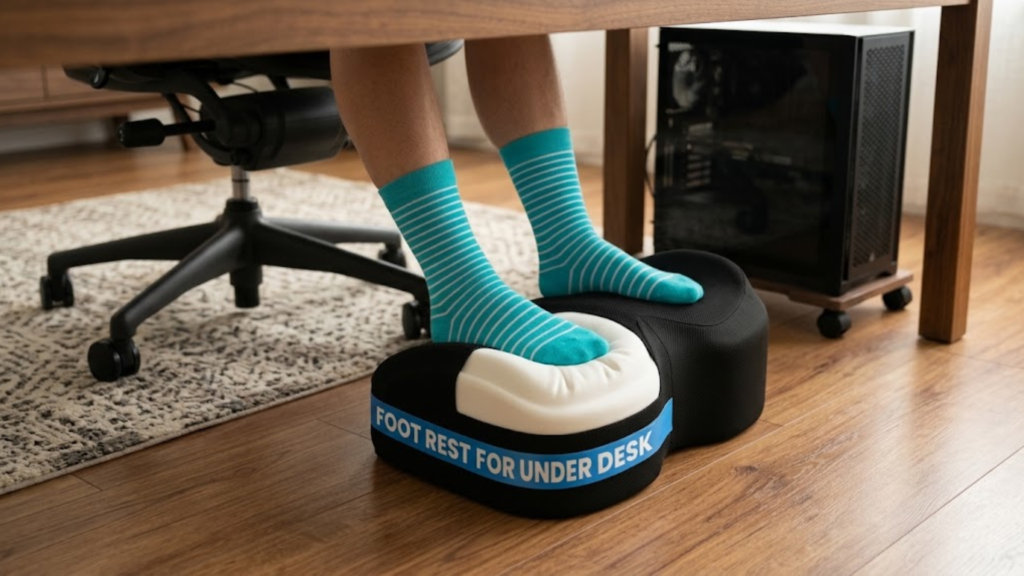
The Everlasting Comfort Memory Foam Footrest is our top pick if you want an under desk footrest for lower back pain that balances soft comfort with firm structural support. Unlike cheap foam blocks that collapse under weight, this footrest utilizes premium high density memory foam shaped into an ergonomic teardrop design.
It can be used with the flat side down for firm elevation, or flipped rounded side down to act as a foot rocker for active dynamic sitting. The breathable mesh cover is removable and machine washable, featuring a non slip rubber bottom that stays anchored on hardwood and carpet alike.
- Material: 100% Premium High Density Memory Foam
- Dimensions: 17″ x 10″ x 5″ inches
- Unique Feature: Dual sided teardrop design (static elevation or rocking motion)
2. Kensington SoleMate Plus (Best Height & Angle Adjustable)
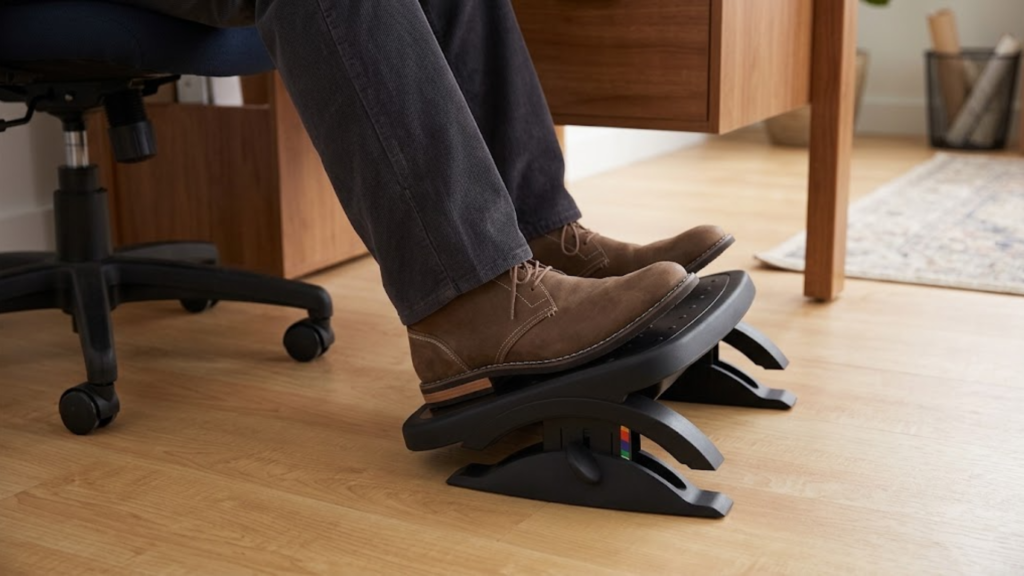
If you need precise height and angle control to match your specific chair height, the Kensington SoleMate Plus is an outstanding under desk footrest for lower back pain. Built with durable, impact resistant plastic and heavy duty rubberized footpads, it allows you to customize your foot placement with a convenient foot-pedal lock mechanism.
The platform tilts up to 20 degrees, allowing you to lock the footplate into your preferred angle or leave it free-floating to encourage continuous leg extension throughout the workday.
- Adjustment: Height adjusts from 3.5″ to 5″, tilt angle up to 20 degrees
- Surface: Large non skid textured footplate
- Mechanism: SmartFit system with easy glide foot pedal lock
3. ComfiLife Ergonomic Dual-Height Cushion (Best Versatile & Rocking)
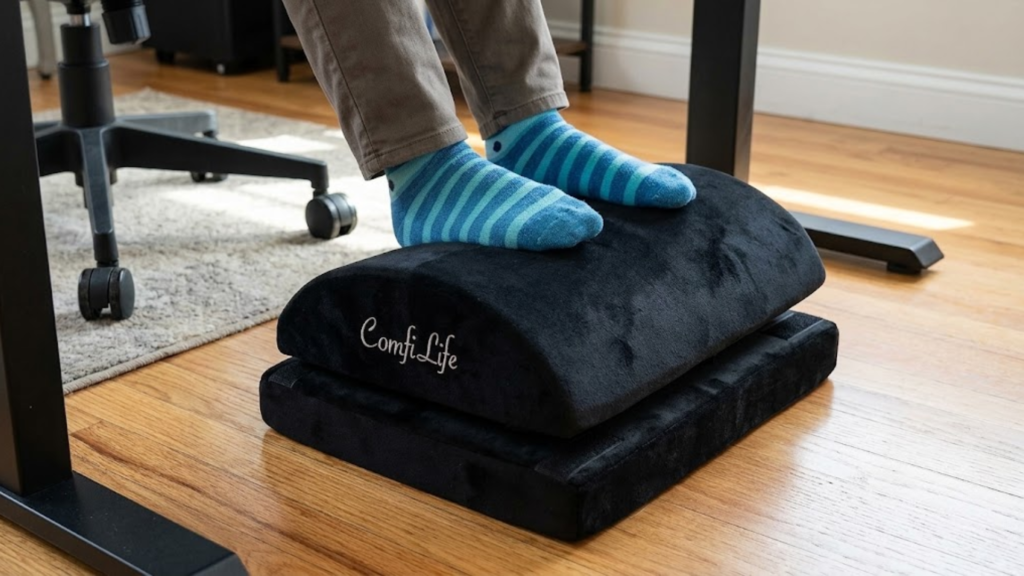
The ComfiLife Ergonomic Dual-Height Cushion is a highly versatile under desk footrest for lower back pain featuring a clever 2-in-1 modular design. It consists of a base cushion and a removable top layer attached via strong velcro strips, allowing you to easily switch between a 4 inch or 6 inch profile based on your desk height.
This flexibility makes it ideal for users sharing a workstation or those who transition between different desk chairs throughout the week. Like the Everlasting Comfort cushion, it flips upside down to serve as an active foot rocker to stimulate leg blood flow.
- Design: 2 Piece Modular Stackable Cushion (4″ or 6″ total height)
- Material: High resilience memory foam with plush velour cover
- Maintenance: Removable machine washable plush cover
4. Eureka Ergonomic Tilt Metal Footrest (Best Heavy-Duty & Massage Surface)
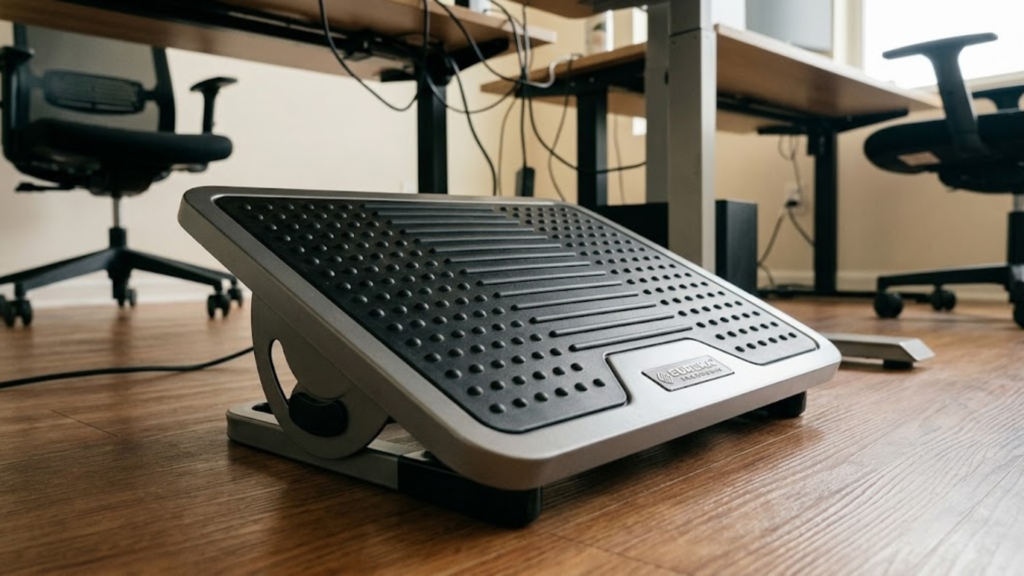
If plastic or foam models feel flimsy to you, the Eureka Ergonomic Tilt Metal Footrest is a heavy duty under desk footrest for lower back pain engineered with a solid steel structural frame. It supports up to 120 lbs, ensuring zero flexing or shifting while you rest your legs.
The footplate features textured raised bumps and central massage rollers designed to massage foot soles and stimulate blood circulation during long office shifts. Its floating tilt angle adjusts smoothly from 0 to 20 degrees with subtle foot pressure.
- Frame Material: Commercial grade alloy steel
- Surface: Scratch resistant rubberized massage plate with central rollers
- Tilt Range: 0 to 20 degrees free-floating tilt
5. Mind Reader Adjustable Height Foot Stool (Best Budget Pick)
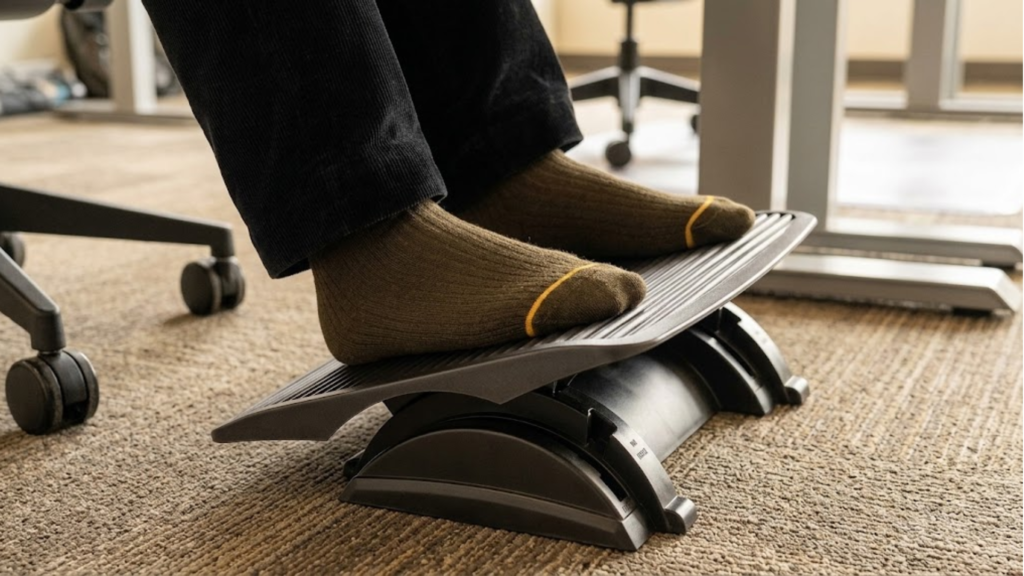
For budget-conscious remote workers seeking an effective entry-level solution, the Mind Reader Adjustable Height Foot Stool delivers full functionality at an ultra-accessible price point. This under desk footrest for lower back pain features three manual height settings (3″, 4.5″, and 6″) to lift your feet into a healthy ergonomic angle.
The textured surface includes geometric raised bumps to prevent shoe slipping and provide tactile feedback for foot massage while sitting at your computer.
- Height Positions: 3 Adjustable heights (3″, 4.5″, 6″)
- Material: Lightweight, high impact polymer plastic
- Weight: 3.2 lbs
Buyer’s Guide: How to Choose the Right Footrest for Your Desk Setup
Before purchasing an under desk footrest for lower back pain, consider these three key ergonomic factors:
1. Memory Foam Cushion vs. Rigid Adjustable Plastic/Metal
- Memory Foam Cushions (e.g., Everlasting Comfort, ComfiLife): Best if you like to work in socks or bare feet. They offer soft contouring, plush comfort, and can easily flip upside down for rocking.
- Rigid Plastic/Metal Frames (e.g., Kensington, Eureka): Best if you wear shoes at your desk, need fixed angle lock positions, or require heavy duty height adjustments to compensate for fixed height desks.
2. Height Adjustment & Desk Clearance
Ensure your footrest height leaves ample clearance between your knees and the underside of your desk. Shorter individuals typically benefit from higher footrests (5 to 6 inches), whereas taller individuals using elevated office chairs may only require a 3 to 4 inch lift.
3. Active Motion (Rocking) Features
Dynamic movement reduces static muscle fatigue. Choosing a footrest that allows rocking (either via a curved foam base or a free-floating tilt mechanism) keeps your lower leg muscles active, promoting lymphatic drainage and preventing leg stiffness.
Frequently Asked Questions (FAQ)
Do under desk footrests help back pain?
Yes. An under desk footrest for lower back pain lifts your feet so your thighs rest parallel to the floor, tilting your pelvis into a natural position that maintains the inward curve of your lower back and reduces disc compression.
What is the ideal height for an under-desk footrest?
The ideal footrest height allows your knees to bend at a 90 to 100 degree angle with your feet resting flat on the platform without your knees pressing against the underside of your desk. For most users, a height between 4 and 6 inches is ideal.
Should I choose a firm footrest or a soft memory foam cushion?
If you wear shoes at your desk and prefer mechanical angle adjustments, choose a rigid plastic or steel footrest like the Kensington SoleMate. If you work barefoot or in socks, a high density memory foam cushion like the Everlasting Comfort provides far superior comfort.